


Hazardous Waste Recycling
Welcome to Reboot Tech, your trusted partner for hazardous waste recycling. We are committed to helping you safely dispose of items that can harm the environment. Let’s work together to keep our planet clean and safe.
Hazardous waste can pose serious risks to both the environment and human health. For instance, improperly disposed batteries can leak harmful chemicals like lead and cadmium into the soil and water. Did you know that one improperly discarded battery can contaminate thousands of gallons of water? Similarly, paints and solvents can release toxic fumes and pollutants. A simple spill of motor oil can create a large, lasting impact on wildlife and ecosystems. It’s crucial to handle these items responsibly.
Note that this is not a complete list of hazardous e-waste, so if your device contains any of the following, it is generally considered hazardous e-waste. Mercury-containing devices: This includes items like mercury switches, relays, and certain older thermostats. Cathode Ray Tubes (CRTs) in general: Other types of equipment such as CRT-based medical devices or industrial equipment may also contain hazardous materials. Certain electronic components: Some older electronic devices may contain hazardous substances like cadmium, beryllium, or lead. Examples include certain capacitors, resistors, and relays.
Get A Quote
List of Hazardous Waste Items
Batteries
- Alkaline batteries
- Lithium-ion batteries
- Nickel-cadmium (NiCd) batteries
- Lead-acid batteries
Monitors And Displays
- CRT devices including older televisions and computer monitors
- LCD desktop computer monitors, laptop computers, and tablets
- LCD televisions and smart displays
- Plasma televisions
- OLED-containing televisions
- OLED-containing desktop monitors, laptop computers, and tablets
- Portable DVD players with LCD screens
Specialized Equipment
- Cash registers and oscilloscopes containing CRTs
Light Bulbs
- Fluorescent light bulbs
- LED light bulbs

Kitchen Appliances
- Microwaves ovens
Microwave ovens made mostly of plastic don’t have to follow the rules for major appliances under the Metallic Discards Act. However, they still need to be managed under the rules for used electronic devices (UWED). A recycler specializing in used electronic devices can take apart these microwave ovens, whether or not they have materials of concern inside.
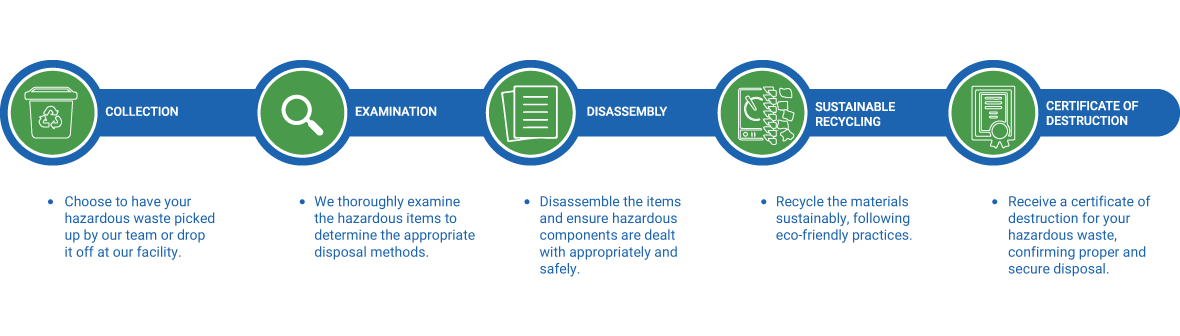
Hazardous Waste Recycling Process
EcoNews
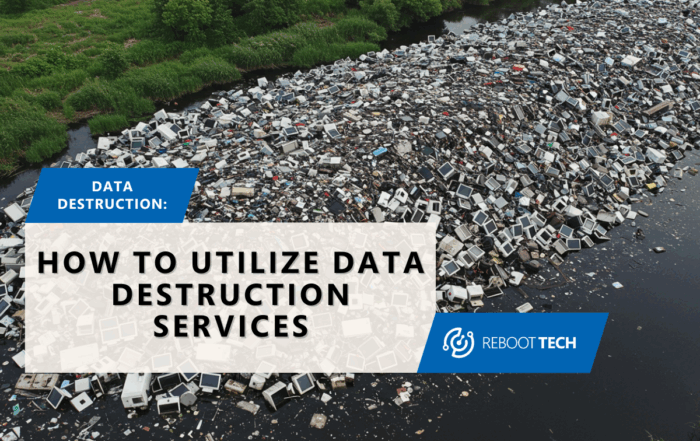
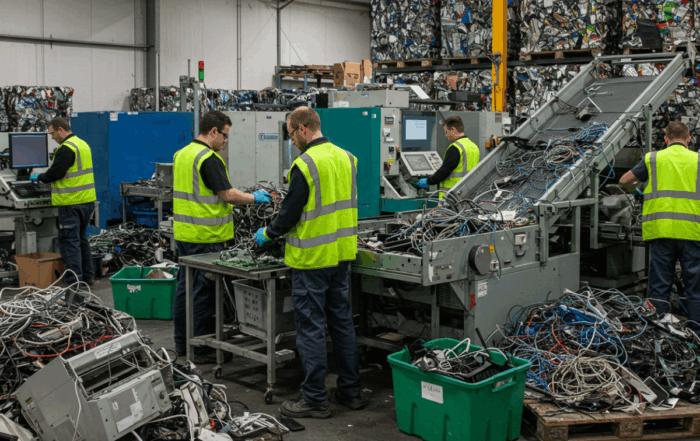
Utilizing Data Destruction Services When it's time to recycle old computers, hard drives, or office tech, there’s one thing you can’t afford to overlook—your data. In a world where data breaches cost companies millions [...]
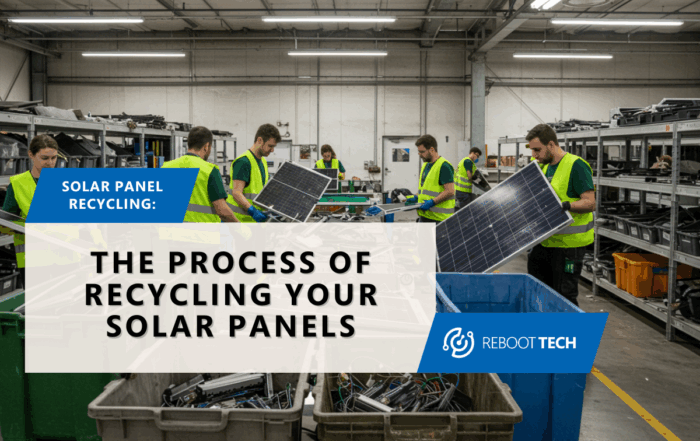
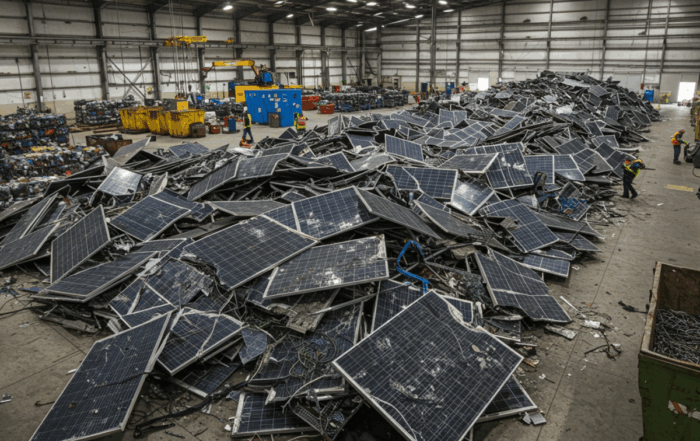
Recycling Your Old Solar Panels As solar panels become more popular, many homeowners and businesses are left wondering: what do I do when it’s time to replace them? Whether you’re upgrading to newer [...]
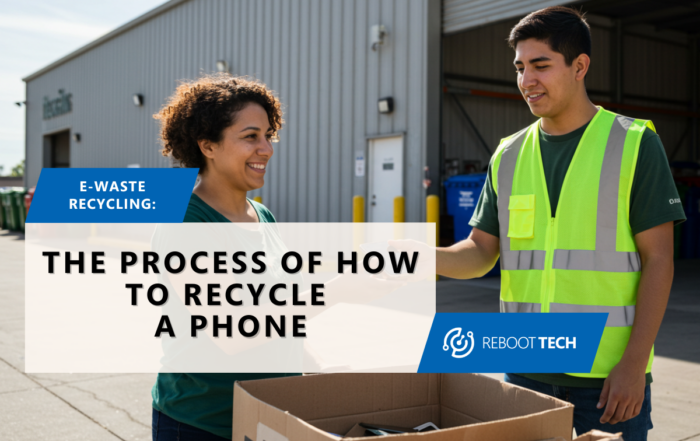

The Process of How To Recycle A Phone Ever found an old phone in a junk drawer and thought, "What do I do with this?" You’re not alone. Millions of people hang onto outdated [...]
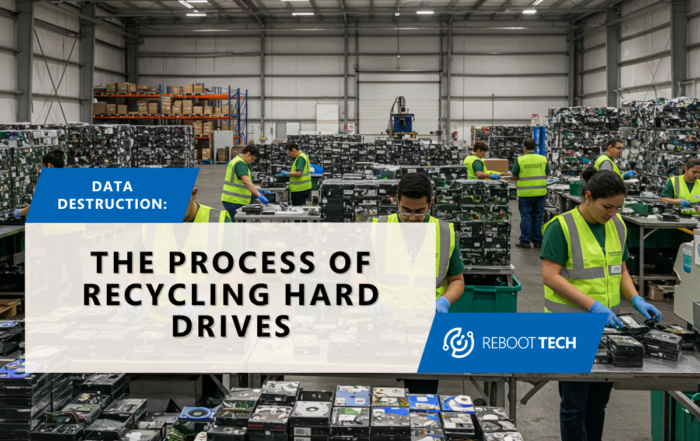
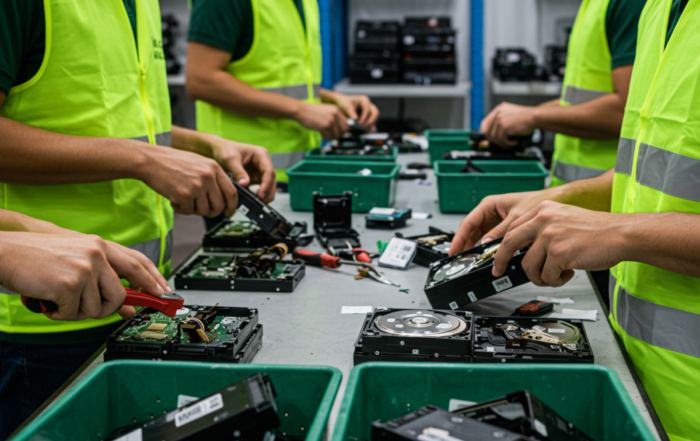
The Process of How Hard Drives Are Recycled Ever stared at a drawer full of old hard drives and thought, “What do I even do with these?” You’re not alone. From busted desktops [...]